


Engage your child’s curiosity! Boost their sense of wonder! It’s easier than you think, especially with these STEM activities for kids. These challenges encourage your young ones to use both their brains and their hands. Just grab a few simple items and watch as they take fun, educational learning to a whole new level.
Egg Zip-Line Challenge
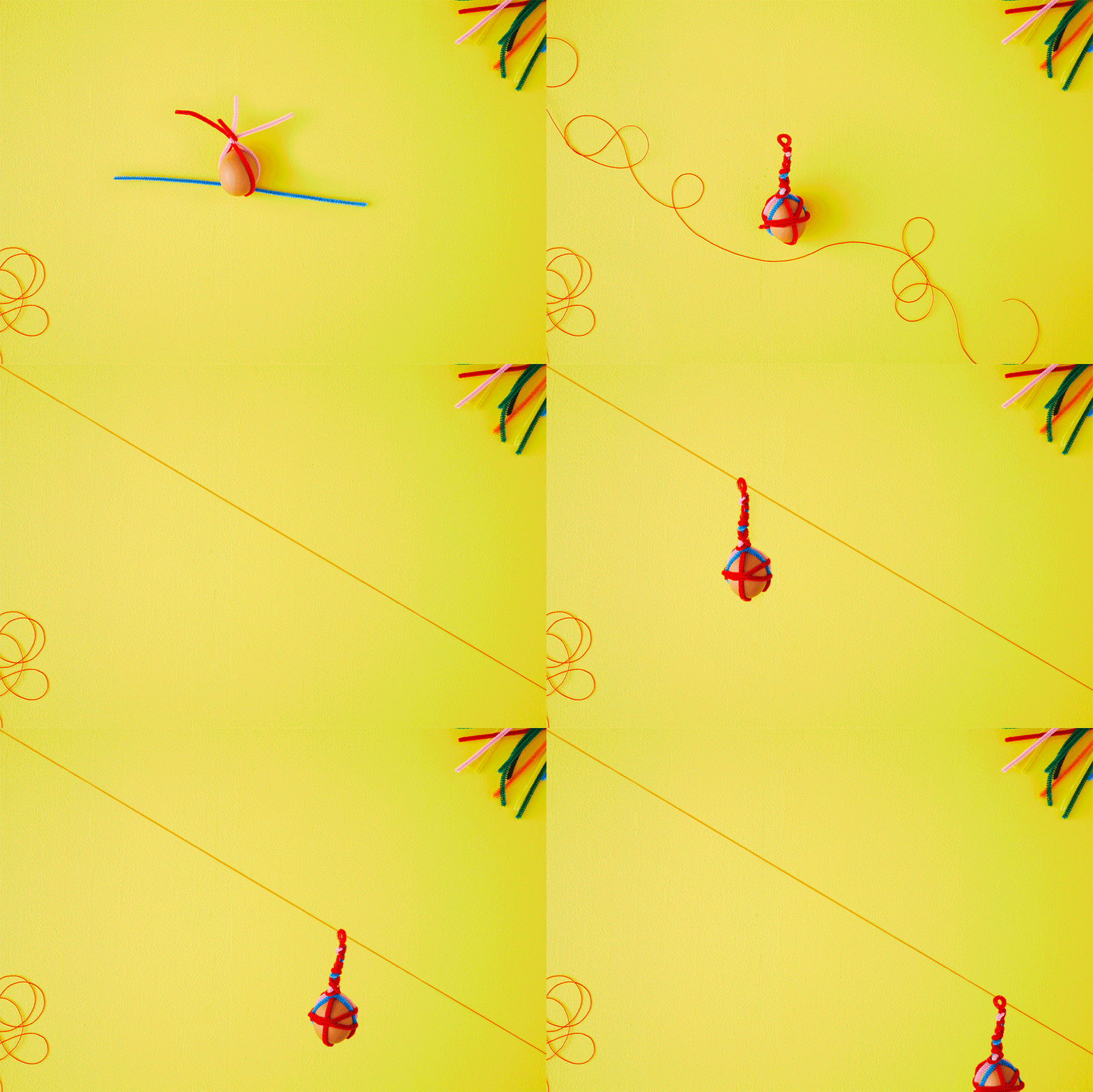
Want to distract the kids and teach them investigative and maths skills? Set up this action-packed STEM activity.
Step 1: Tie a length of string between the backs of two chairs (one high, one low) so there’s a steep incline.
Step 2: Use pipe cleaners to build harnesses for different kinds of eggs. Try plastic eggs, egg-shaped chocolates of different sizes, or even hard-boiled eggs.
Step 3: Twist two extra pipe cleaners together to create a stronger wire and attach one end to the harness and the other in a loose loop around the string.
Step 4: Time how long it takes for eggs of a certain weight to travel down the wire. How does the weight of the egg affect the time it takes to travel? For a bonus challenge, swap the string out for wool or plastic tubing, and compare how the texture of the zip-line affects the times of your flying eggs.
What You’ll Need

- Kadink Chenille Stems Bright 70 Pack
- Educational Colours Spaghetti String Red
- Eggs (hard-boiled, chocolate or plastic)
- Timer or Stopwatch
SEE ALSO: Paper Plane Flight Challenge for Kids
Slingshot Straw Rocket
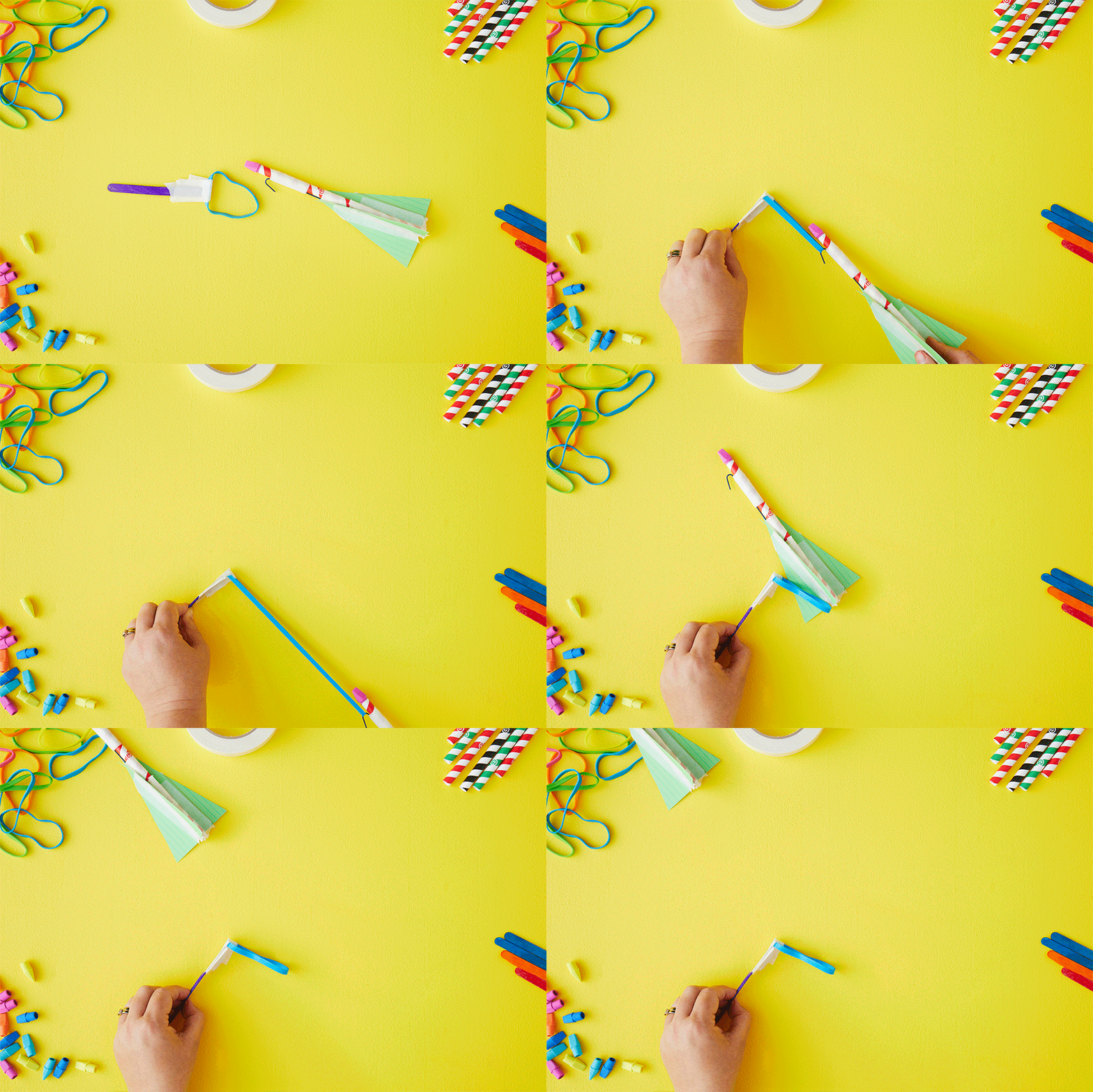
If you’ve got a young aviator on your hands, give them this cool STEM challenge – it will demonstrate the principles of momentum, drag and stability!
Step 1: Push an eraser tip into the end of a jumbo straw.
Step 2: Straighten a paper clip so just one ‘hook’ is left, then attach it to the straw with two pieces of masking tape, so the bent tip is positioned just under the eraser.
Step 3: Cut three long triangular fins out of cardboard or index cards, and, ensuring they’re evenly spaced, tape each one to the bottom of the straw so it ends up looking like the bottom of a rocket.
Step 4: To make the slingshot, grab a craft stick and tape the middle of a large rubber band to the end of it.
Step 5: Hold your slingshot in one hand and with the other, hook the rubber band with the bent hook on the rocket. Pull tight – like a slingshot – and aim your rocket. Let go and watch it zoom through the air!
What You’ll Need

- Kadink Wooden Craft Sticks Coloured 180 Pack
- Biopak BioStraws Paper Straws 40 Pack
- J.Burrows 50mm Paper Clips Assorted 50 Pack
- Studymate Eraser Tips Assorted 15 Pack
- J.Burrows No.64 Rubber Bands 100g Assorted
- Studymate Study Cards Ruled 127 x 76mm Green 25 Pack
- PPS Masking Tape 24mm x 50M
- Studymate Soft Grip Scissors 5.3"/135mm Green
SEE ALSO: 5 Easy Gravity Experiments for Preschoolers
Make a Playdough Planet

Budding scientists will love delving deep into the Earth’s layers with this STEM project for kids. Not only will it help kids hone their engineering and technology skills, this activity also nurtures scientific learning and sensory play.
Step 1: Creating a white ball of playdough for the ‘inner core’ of the planet.
Step 2: Carefully wrap over the white playdough ball with a layer of yellow – almost like you’re wrapping a present – for the ‘outer core’. Then add an orange layer for the ‘mantle’, a red layer for the ‘crust’ and a blue layer for the ‘sea’.
Step 3: Using tracing paper, roughly trace a country or two off of a world map and cut out.
Step 4: Roll out green playdough and use a plastic knife to cut around your tracing paper stencils for some ‘land’ pieces. Press these onto your planet.
Step 5: Now, use the knife to open up the ball so you can see the cross sections – ta da!
What You’ll Need

- Kadink Modelling Set 10 Pack
- Derwent A4 60gsm Tracing Paper Pad 50 Sheets
- Kadink Dough Bucket 900g Primary
- Studymate Soft Grip Scissors 135mm Blue
- Staedtler Natural Graphite Pencils HB
- Born Palette Knife Set 5 Pack
- Studymate Double-sided World Flags Wall Chart
SEE ALSO: STEM Activities for Preschoolers that Teach Problem Solving
String Phone Activity
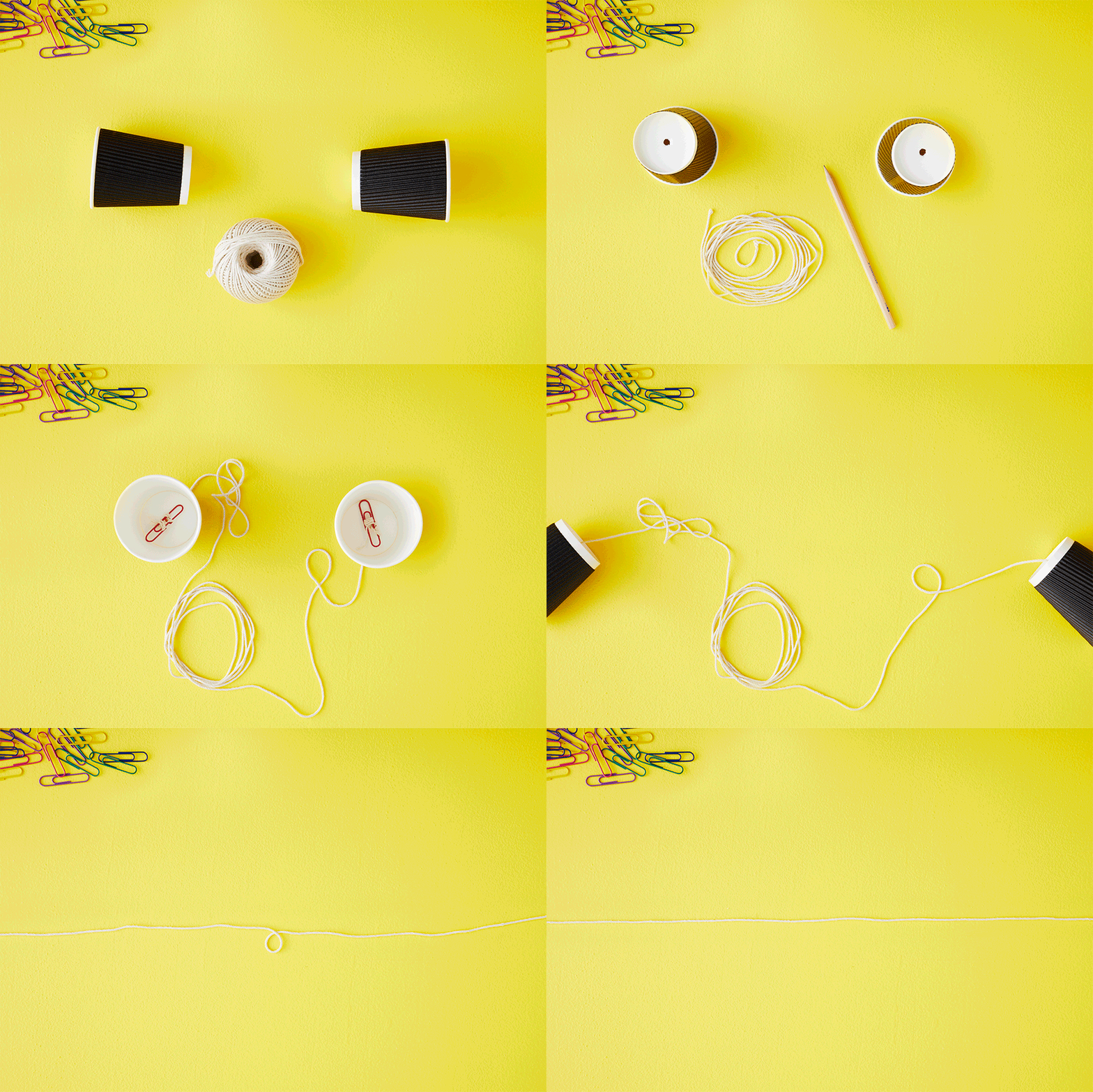
This old-school string phone STEM activity is a brilliant way to teach kids about sound waves and vibrations.
Step 1: Use a pencil to poke holes in the bottom of two disposable cups.
Step 2: Cut a 20m length of string and thread each end through the holes in the cups. Knot it or fix the string in place inside each cup with a paperclip.
Step 3: Give each child a cup and move them apart so that the string is taut, and not touching anything. One child speaks into the cup, while the other puts the cup to their ear and listens. Does it work just like a phone? What happens when you try shorter or longer pieces of string?
What You’ll Need
- J.Burrows Corrugated Paper Cup 227mL Black 80 Pack
- Gift Packaging Paper Twine 2mm x 100 m White
- Staedtler Natural Graphite Pencils HB
- J.Burrows 50mm Paper Clips Assorted 50 Pack
SEE ALSO: 4 Construction Activities for Kids Who Love to Build
Rainbow Rubber Eggs
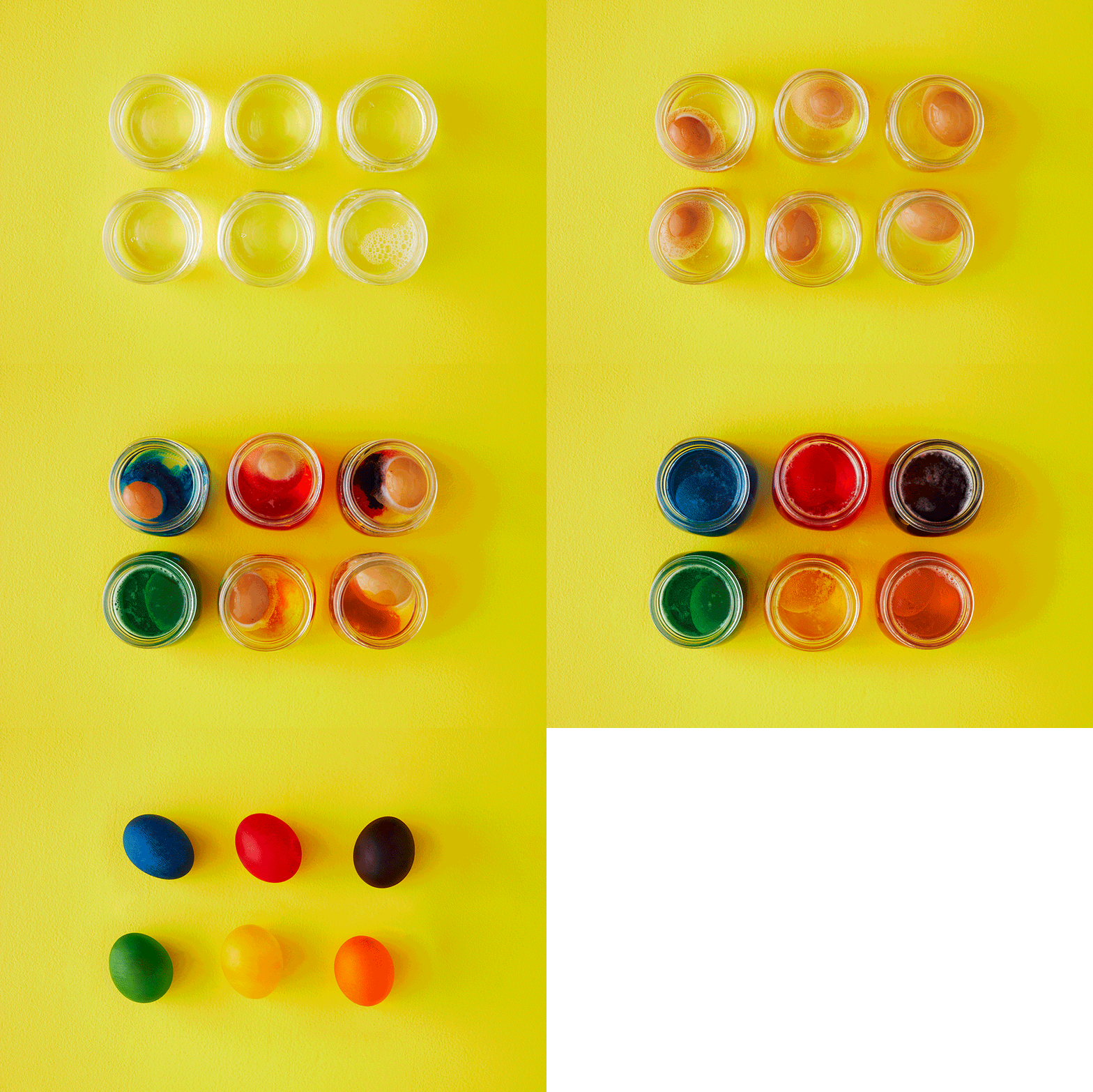
This mind-boggling STEM project uses vinegar and food colouring to transform eggs – and you can expand on it to discuss chemical reactions and investigation skills along the way.
Step 1: Put a raw egg inside a wide-mouth jar and cover it completely with white vinegar. Mix a little food colouring into the vinegar and leave for 24 hours. Repeat this with as many eggs and colours as you like to make a rainbow assortment of eggs.
Step 2: Replace the liquid in each jar with fresh vinegar and more food colouring, and leave for another 24 hours.
Step 3: Carefully lift the eggs out and rinse. Kids will find the hard shell is gone – dissolved by the vinegar – and the eggs now have a rubbery and bouncy texture on the outside. Just be warned that the rubbery membrane is fragile, and the egg is still raw inside, so best to do this bit somewhere easy to clean!
What You’ll Need
- a wide-mouthed glass jar
- food colouring
- raw whole egg
- white vinegar
This article was originally published in March 2021 and has been updated.
