


Working from home some or all of the time has become the new norm for many office workers. Because of this, it’s vital to understand how to appropriately claim expenses incurred while working from home to maximise your possible refund. Follow these expert tax return tips to make the most of your expenses this year.
Key Takeaways
- Preparation and record keeping are everything: keep invoices, receipts and a log you update as you go of all hours worked from home.
- Choose a method that best suits you to claim working from home expenses: fixed rate per hour or actual cost.
- The fixed rate method covers electricity, gas, phone, internet, stationery and computer consumables; you can still claim the decline in value of assets like computers and office furniture separately.
- The actual cost method may deliver bigger deductions but needs more detailed records: a diary of hours worked, records of all your work from home expenses and clear apportionment of work-related use.
- Make tax time easier with digital receipts and categorised transactions; use your bank’s tools and store Officeworks receipts in the Officeworks app.
- For employees, assets over $300 are depreciated over their effective life; items costing $300 or less used wholly for work purposes can be claimed immediately.
- Always apportion mixed-use items correctly. For example, if you’re using a printer 80 per cent of the time for work, only claim 80 per cent of the cost or its decline in value if it cost more than $300.
- To boost your possible tax deductions, consider paying professional membership fees, making extra super contributions and making deductible donations before 30 June.
How to Prepare for Your 2025-26 Tax Return
Maximising the amount you could claim as a deduction comes down to preparation and good record keeping. “If you don’t have the paperwork, you can’t claim a deduction,” says Mark Chapman, director of tax communications at H&R Block. “Gather together all the information you’ll need to help you prepare your tax return, including invoices and receipts for work-related expenses.” Of course, not everyone does this and often this results in a lower tax refund.
SEE ALSO: 10 Tax Deductions You Could Be Claiming

Which Working‑From‑Home Method Should I Use (Fixed Rate vs Actual Cost)?
When claiming working from home expenses, it’s all about working out which method you can use, then determining which gives you the best outcome. To use any method, you must meet the eligibility criteria and record-keeping requirements.
To claim your working from home expenses, you must be working from home to fulfil your employment duties, not just carrying out minimal tasks, such as occasionally checking emails or taking calls. Also, you must incur additional expenses as a result of working from home.
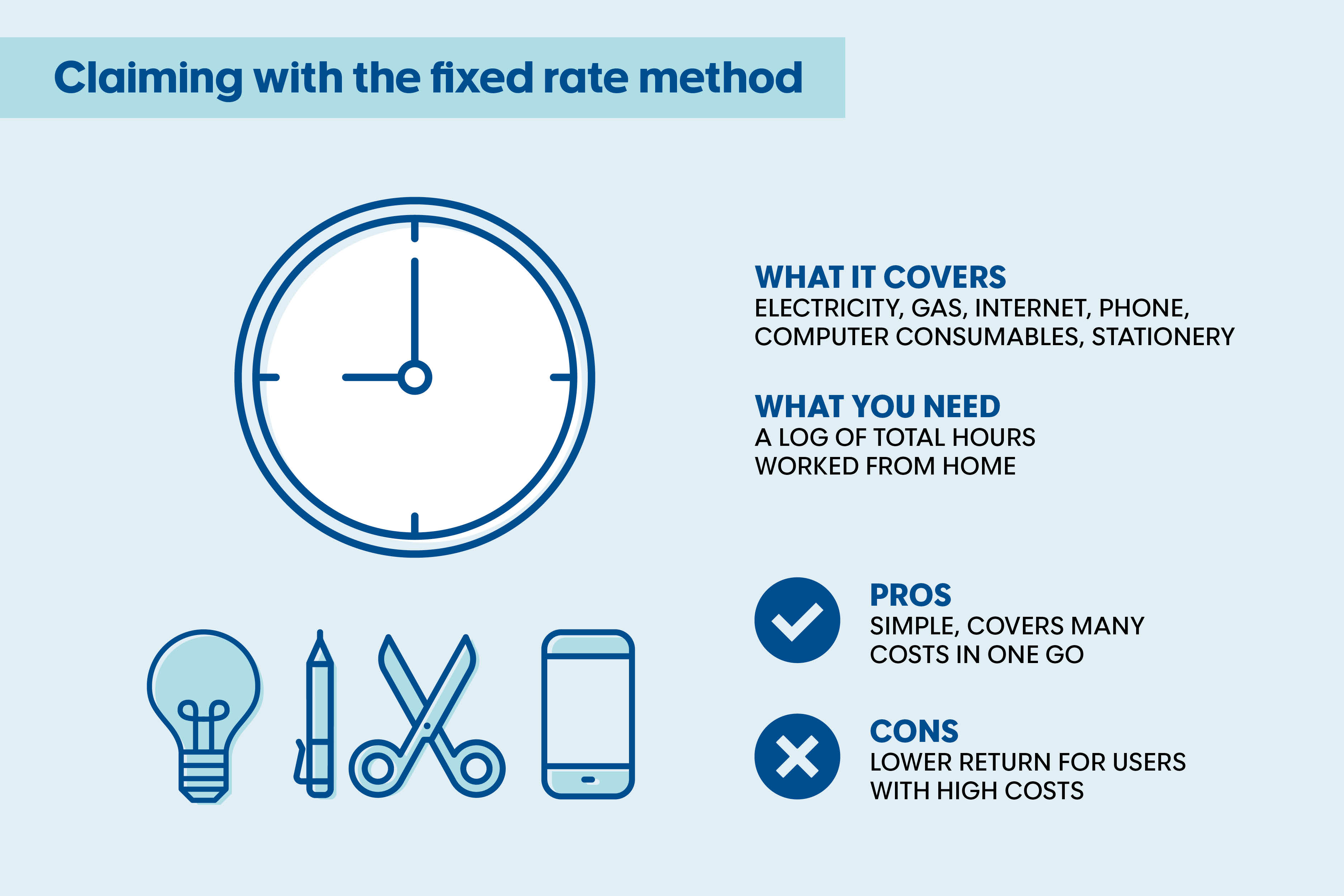
The fixed rate per work hour covers additional running expenses incurred for energy expenses (electricity and gas), phone usage, internet, stationery and computer consumables. If you use the fixed rate method, you can’t claim additional deductions for any expenses covered by the rate. You can separately claim the decline in value of assets used while working from home, such as computers and office furniture, and other expenses not covered by the rate.

Your alternative – the actual cost method – “generally produces a bigger deduction than the cents per hour method, but many people find the record-keeping requirement associated with that method too tough,” says Mark.
“The method that works best for you will depend on your situation, but they each come with different record-keeping requirements. Keeping clear and accurate records throughout the year will help ensure you can confidently claim the deductions you’re entitled to at tax time,” says ATO Assistant Commissioner and tax time spokesperson Anita Challen.
What Records Do I Need for Working‑From‑Home Deductions?

Whichever method you choose, there is some record keeping required. The type of records you need to keep will depend on which method you use to calculate your expenses.
To claim a deduction using the fixed rate method, you will need:
- records of the actual hours you worked from home, kept at the time they occur
- evidence for the expenses covered by the rate that you incurred; for example, if you incurred phone and electricity expenses you will need to keep one bill for each
- records or receipts for items and expenses you claim as a separate deduction (not covered by the fixed rate).
To claim a deduction using the actual cost method, you will need:
- Records such as receipts or bills for all expenses being claimed
- evidence of the time you spent working from home over the financial year, such as a timesheet/spreadsheet of hours or a four-week diary that represents your usual pattern of working at home
- records that show how you determined the work-related portion of the expenses you are claiming.
Hot Tip: Financial educator Natasha Janssens suggests making the most of your online banking to keep track of expenses. “Many banks have a built-in categorising ability for transactions, in which case you can mark any work-related expenses as such to make them easier to find at tax time,” she says. But remember, you'll still need to keep your receipts for all claims. You can keep all of your Officeworks receipts handy in the Officeworks app or get a digital copy emailed to you.
Can I Claim Items Over $300 Upfront or Do I Depreciate Them?
No matter which method is used, if you purchased an asset or equipment for work and it cost more than $300, you will calculate and claim your deductions for the asset’s decline in value over its effective life (known as depreciation deductions). You can claim immediate deductions for equipment that cost $300 or less if you use it wholly for work purposes.
What Can’t I Claim When Working From Home?
Be aware there are some expenses you can’t claim under either of the methods. These include the cost of items used for children and their education, expenses or items your employer pays for or reimburses you for, and things like tea or coffee for your working-from-home kitchen. An employee working from home generally can’t claim occupancy expenses such as mortgage interest and rent either.
SEE ALSO: Can I Claim It? Your Tax Return Questions, Answered
How to Apportion Work and Personal Expenses Correctly
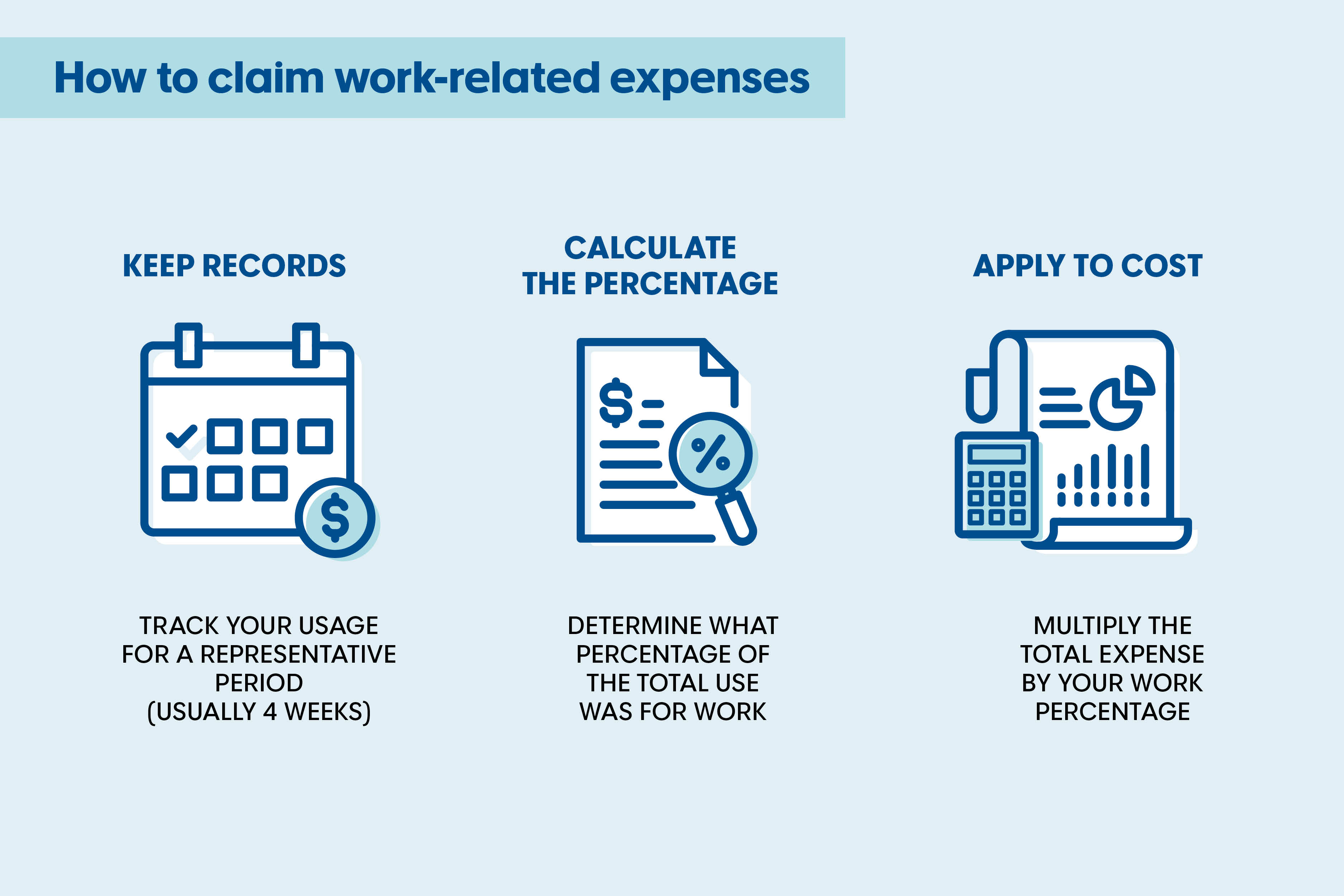
Apportionment is very important because you can only claim the work-related portion of an expense.
If you use an item, such as a laptop or printer, for both work and personal use, you need to apportion the cost between the two, no matter whether you’re claiming an immediate deduction or depreciating the asset. For example, if you buy a printer for $295 that you use 80 per cent of the time for work and 20 per cent for private use, you can claim an immediate deduction for $236 (80 per cent of $295).
End‑of‑Financial‑Year Ways to Boost Your Deductions Before 30 June
If you prepare ahead of the end of the financial year, you can generate some additional deductions, says Chapman, that will give your tax return a welcome boost. These tax return tips include:
- paying any professional or union fees due after June 30 now, to claim the deduction for the whole amount this year
- claiming donations to deductible gift recipients over $2, as long as you have a receipt
- if you have some spare cash, making a personal contribution into your super fund, provided this doesn’t mean you’ll exceed the concessional contributions cap for the year (including employer contributions). “This can be a great way to boost your retirement savings and claim a tax deduction,” says Mark. “The payment must be made by June 30 and you need to submit a Notice of Intent form with your super fund. Then you need to receive acknowledgement from your fund before you claim the deduction in your return.” You can find a standard form on the ATO website.
This is general information only and does not constitute taxation or legal advice. Other requirements under the tax law apply. Seek professional financial and/or legal advice to determine the right outcomes for your business or individual needs.
This article was originally published April 2021 and has been updated.
