


With many people now working from home in some capacity, the good news is you may be able to claim some of your additional running costs as a tax deduction.
The Australian Taxation Office (ATO) has up-to-date advice on the rules for employees who are working from home and businesses who operate some or all of their business from home.
Here’s a summary of what you may be able to claim and ways to calculate your working-from-home deductions at tax time.
At a Glance: Working From Home Expenses
- Choose your calculation method: fixed rate per hour or actual cost; use the option that fits your circumstances and delivers the best deduction.
- The fixed rate method uses a set rate for every hour you work from home and covers phone, internet, energy usage, stationery and computer consumables; you can still claim decline in value, repairs and maintenance for assets separately.
- The actual cost method lets you claim the work-related portion of each expense; it needs detailed records and clear apportionment between work and private use.
- Common claimable working from home expenses include energy usage, phone and internet, stationery and office supplies, decline in value of office furniture and equipment, and repairs/maintenance of depreciating assets.
- You can’t claim personal costs (like coffee) or anything provided or reimbursed by your employer.
- Items costing more than $300 must be depreciated over their effective life; items $300 or less used wholly for work purposes can be claimed immediately.
- Home-based businesses can claim the business portion of running expenses; occupancy expenses (rent, mortgage interest, rates, insurance) are only claimable if the area of your home that you use genuinely has the character of a place of business.
- Keep records that prove your claims: a log of all hours worked from home, bills for phone, data and energy usage, and receipts for items claimed separately.
Working From Home Expenses
There are two methods you can choose from to calculate your working from home expenses, as long as you have the right records. Make sure you use the method that applies to your circumstances and gives you the best outcome.
When considering each claim, the big question the ATO asks is “How much of this expense is work related?” You may need to apportion expenses based on your work and personal use, depending on the method you use to calculate your deduction.
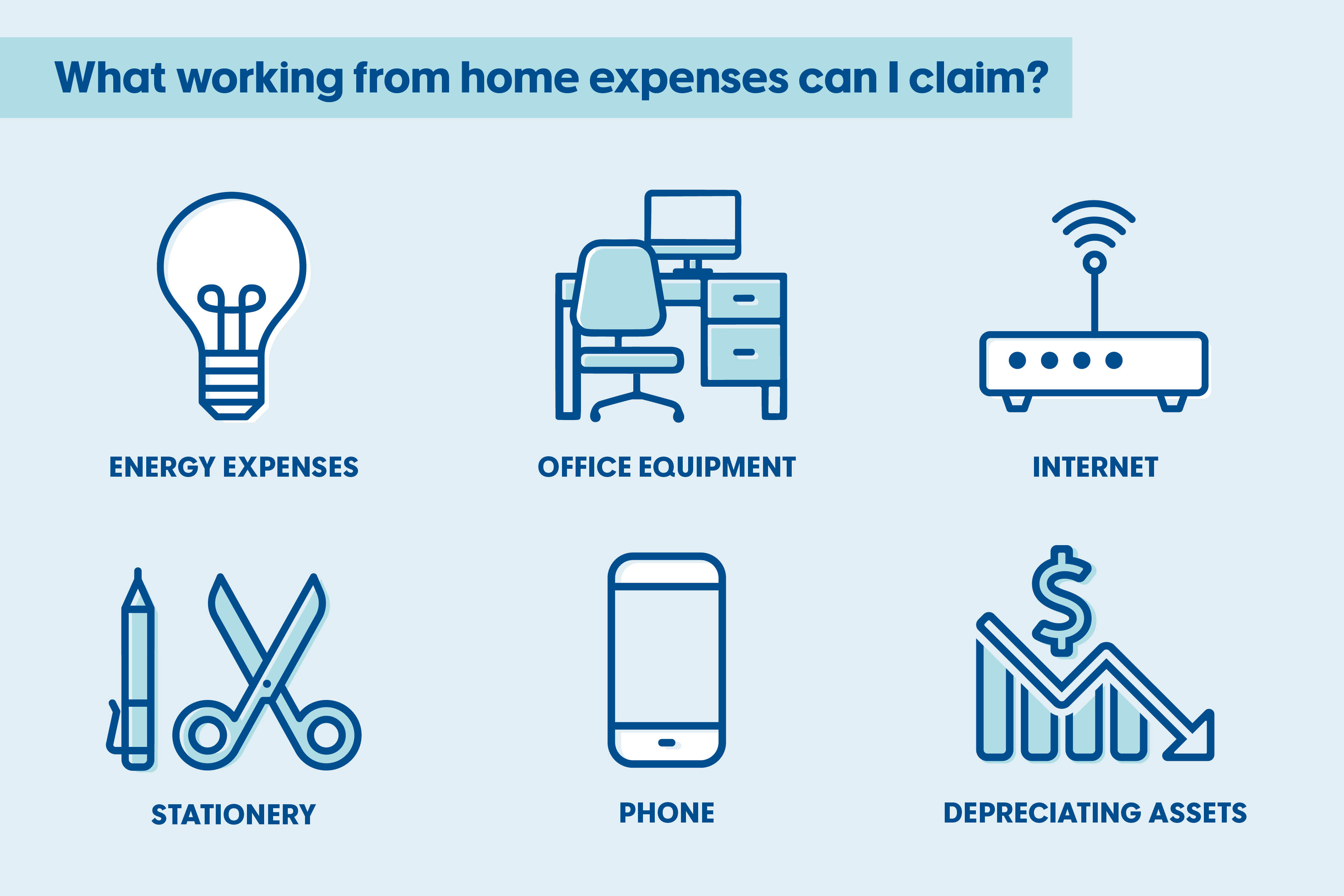
Working from home expenses could include:
- electricity or gas (energy expenses) for heating or cooling and lighting
- home and mobile internet or data expenses
- mobile and home phone expenses
- stationery and office supplies
- the decline in value of depreciating assets you use for work (such as office desks and chairs)
- equipment such as laptops, desktops and software
- the repairs and maintenance to depreciating assets.
But remember, you can’t claim personal expenses, like coffee, or expenses for your children, such as a computer for their schooling. You also can’t claim items your employer provides or where they reimburse you for the expense, like a laptop or phone.
The Golden Rules of Tax Deductions for Working From Home Expenses
Before claiming a deduction for a work-related expense, remember:
- You can only claim expenses you’ve paid for – not items provided by your employer or where you’ve been reimbursed for the cost.
- It must be work-related – directly related to earning your income. If the expense is for a mix of work and private use, you can only claim the work-related use.
- You’ll need records to prove your tax deductions.
SEE ALSO: 10 Tax Deductions You Could Be Claiming
How to Calculate Your Tax Deductions
There are two options for calculating working-from-home expenses, depending on your circumstances.
How Does the Fixed Rate Method Work for Working From Home?
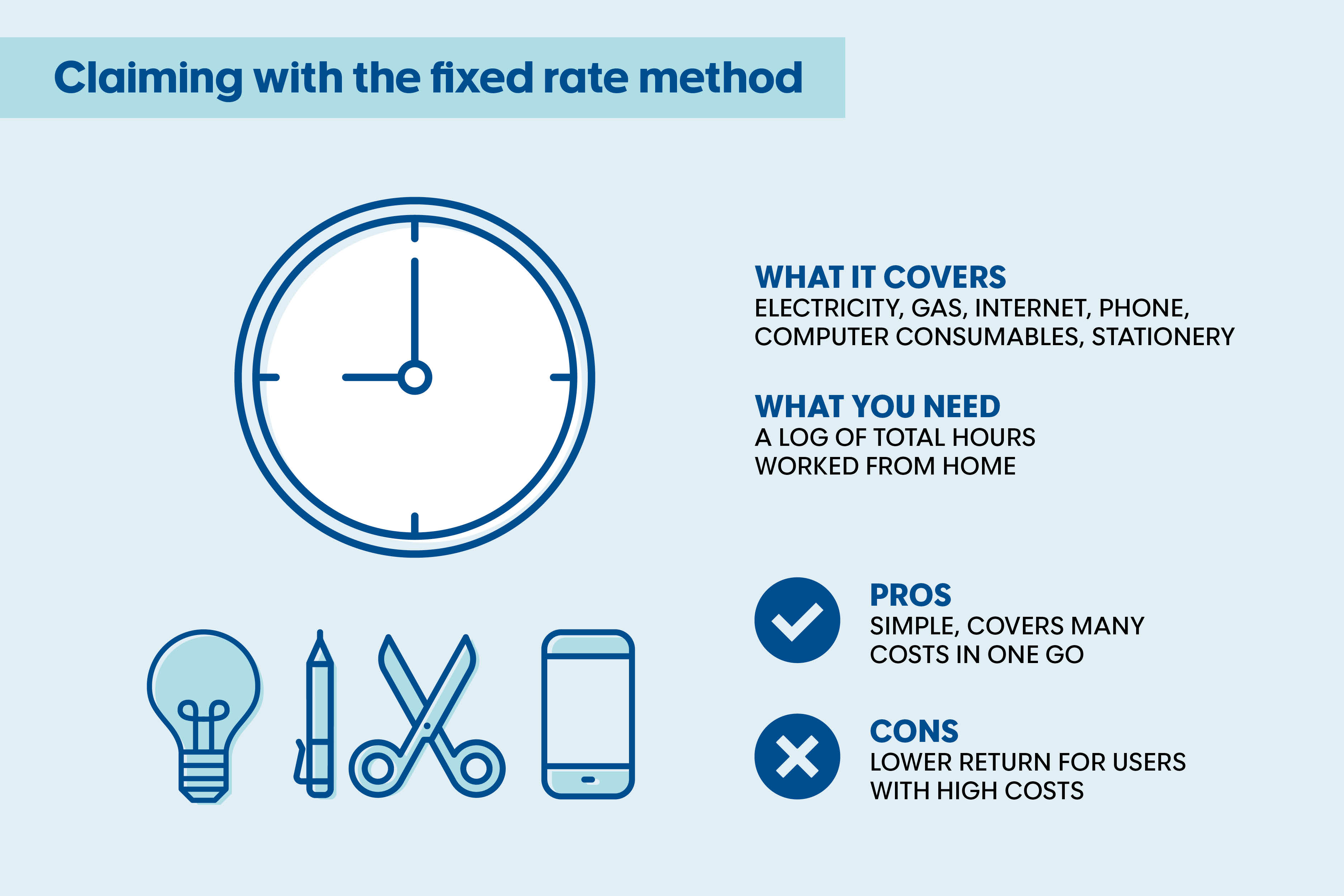
The fixed rate method allows you to claim a set rate for every hour you work from home, and covers your additional running expenses that are often difficult to apportion. The rate covers phone and internet usage, electricity and gas, stationery and computer consumables, such as paper and printer ink.
You can then separately calculate and claim the following expenses that aren’t included in the fixed rate:
- work-related portion of decline in value of assets, such as computers and office furniture
- repairs and maintenance of these assets
- cleaning costs, but only if you have a dedicated home office
To use the fixed rate method, you are required to keep a record of all the hours you work from home, using a diary, timesheet, roster or similar document. You’ll also need one piece of evidence of each type of expense covered by the rate that you incurred – such as a phone or electricity bill.
You’ll need receipts for each item you claim separately, plus records of how you calculated the apportionment and decline-in-value calculations where appropriate. The free myDeductions tool in the ATO app is a great way to keep a record of all your working-from-home expenses. The Officeworks app also offers a convenient way to save your store receipts by scanning them in-store, ensuring you have all necessary documentation at your fingertips.
Note: If an item costs more than $300, you claim the decline in value of the item over its effective life, not the whole amount (see below), and you must apportion work and personal use. This handy depreciation and capital allowances tool can help you easily calculate your deduction.

How Does the Actual Cost Method Work for Working From Home?
If you're disciplined about keeping records, you could calculate the work-related portion for most or all working-from-home expenses using the actual costs method. The ATO has a home office expenses calculator and a depreciation and capital allowances tool to help you add it all up. Speak with a registered tax professional about what you can and can't claim. Just make sure the agent is registered with the Tax Practitioners Board.
To help you compare the methods, the ATO has working-from-home expenses guidance on their website.
SEE ALSO: Tax Return Tips to Get the Most Out of Your Return
How to Calculate Expenses That Cost More Than $300
If an item costs $300 or less, you can claim an immediate deduction for its cost in the year you buy it if you use it wholly for work purposes. When an item costs more than $300, like some computers, you will need to deduct the item’s decline in value over its effective life. This is also known as depreciation. There are two different methods for calculating a decline in value deduction.
Your decline in value deduction takes into account the number of days during the year that you owned and used the item for work purposes.
Equipment costs can be complex to calculate so ask a registered tax professional to help or use the calculators on the ATO website.

Tax Deductions for Home-Based Businesses
If you are running some or all of your business from home, you may be able to claim tax deductions for the business portion of:
- running expenses – for example, the usage costs of electricity, gas, phone, internet, cleaning and the decline in value of business assets
- occupancy expenses – for example, rent, mortgage interest, council rates and insurance.
The types of expenses you can claim depend on how you operate your business out of your home. For example, you can only claim occupancy expenses if the area of your home set aside for your business has the character of a ‘place of business’.
Your business structure also affects what you may be entitled to and your obligations, so make sure you have a look at the ATO’s website.
Find out more about claiming a tax deduction for home-based business expenses – you can find the ATO’s home-based business expenses fact sheet there too.
What to Try
- J.Burrows 80gsm Premium A4 Copy Paper Carton
- PPS Moving Boxes 450 x 300 x 295mm 10 Pack
- Crystalfile Carry Case Foolscap Clear
- J.Burrows Insert Binder A4 4 D-Ring 50mm Black
- Keji A4 Home Laminator
- J.Burrows A4 Laminating Pouches Gloss 100 Pack
- Quartet Basics Magnetic Whiteboard 600 x 900mm
- J.Burrows Business Card Folder Black
- PPS Window Faced DL White Envelopes 500 Pack
- J.Burrows Yearly Time and Pay Book
- Otto A5 Day to Page Tri-Fold FY26/27 Diary Green
- Otto A5 Day To Page Suede Diary FY26/27 Burgundy
- Archer Chair Black
- Otto Carlsson Sliding Door Desk Oak
- J. Burrows Mesh Drawer Riser with Drawer White
- Lenovo 14" Ideapad 5x 2-in-1 Copilot+ PC Snapdragon X 16/512G
- J.Burrows MK100 Wireless Keyboard & Mouse Combo
This is general information only and does not constitute taxation or legal advice. Other requirements under the tax law apply. Seek professional financial and/or legal advice to determine the right outcomes for your business or individual needs.
This article was originally published in May 2020 and has been updated.
