


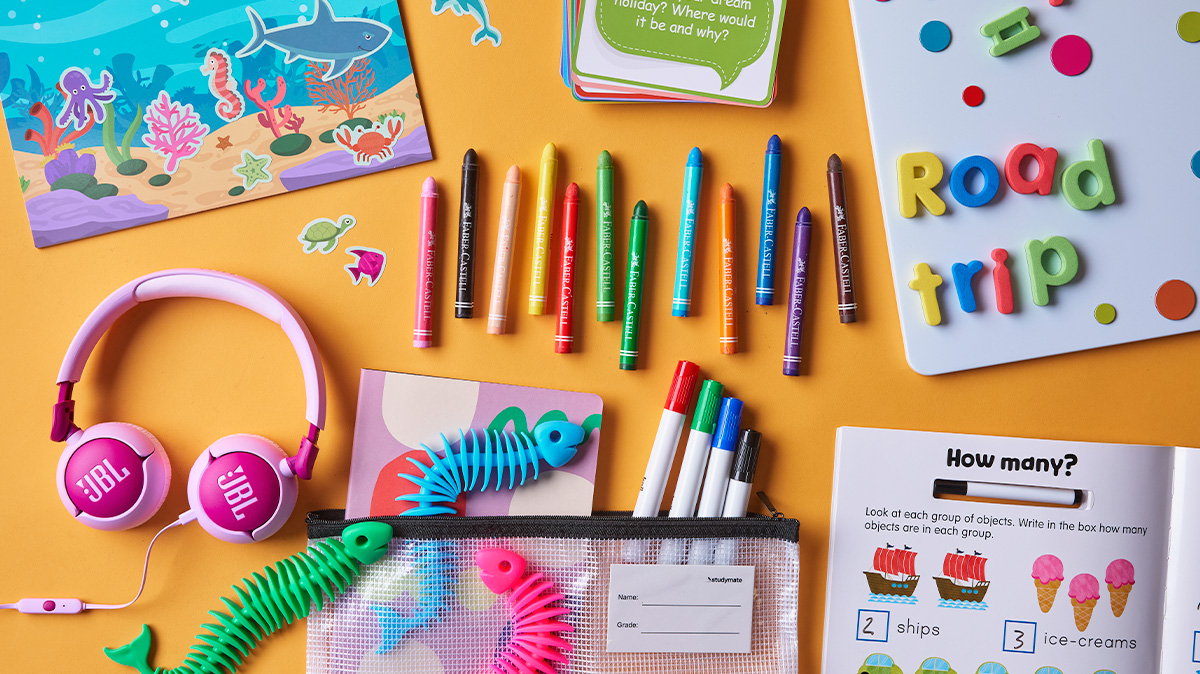
Screen time can be a great source of learning and fun, but when it’s time to balance it with some offline school holiday activities that won’t break the bank – these ideas hit the trifecta. Creative, engaging and analogue, these activities are perfect to take on the road or keep your little ones busy at home.
School Holiday Activities: How to Build a Busy Box
A busy box is a container filled with different activities to keep kids engaged. Whether you’re braving a long drive with the kids or working from home through the school holidays, these crafty ideas will keep them entertained no matter where you are.
Minimise the Mess
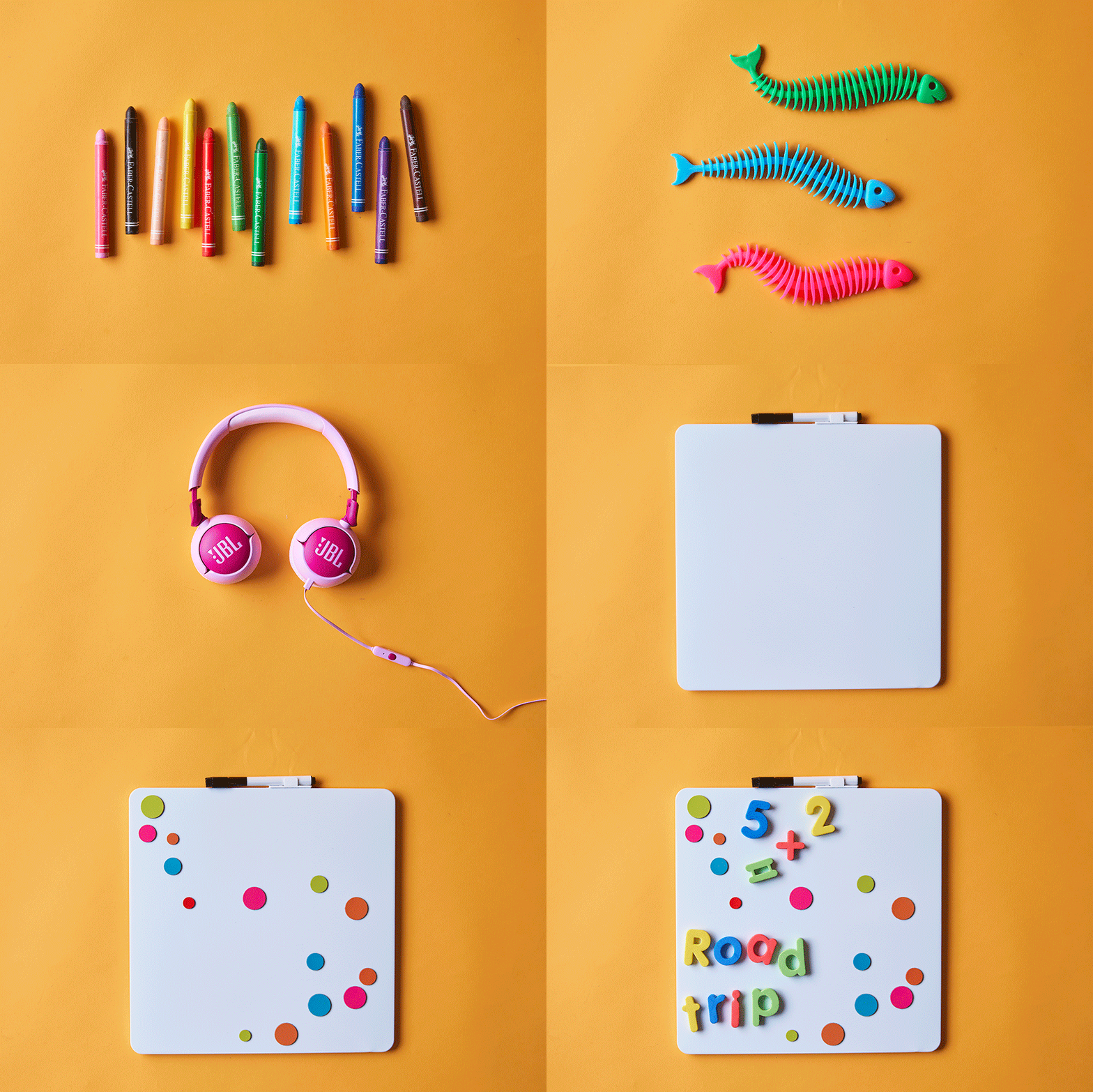
Fill the kit with low-mess items to keep your clean-up duty at a minimum. The basics include a notepad and crayons, stored in a pencil case. Add in a sensory fidget toy to keep little hands busy (and away from nearby siblings) and a pair of kids’ headphones in case screen time is needed to survive the final leg.
Include an Open-Ended Activity
A small magnetic whiteboard and markers lend themselves to classics like Noughts and Crosses, I Spy or creating pictures from squiggles. Expand the possibilities with magnetic numbers or dot magnets, which can be used for a game of Four in a Row, by simply drawing a grid of seven columns and six rows.

Go for Reusable Activities
To get the most from your kit (and inspire sharing between kids), look for items that can be used more than once, like a wipe-clean learning workbook or reusable sticker activity book. A set of conversation starter cards is a great pick for getting everyone involved.
What to Try
- Kadink Write & Wipe Words Set
- Kadink Write & Wipe Maths Set
- Studymate A4 Mesh Pencil Case Clear
- Kadink Reuseable Sticker Activity Pad Animal Habitats
- JBL JR320 Kids On-Ear Headphones Purple
- Faber-Castell Jumbo Wax Crayons 12 Pack
- Lucasfilm Star Wars A7 Notepad 120 Pages
- J.Burrows Magnetic Whiteboard 292 x 292mm White
- Keji Whiteboard Markers Bullet Assorted 4 Pack
- Three By Three Colour Dot Magnets Brights 30 Pack
- Kadink Chunky Foam Magnets Lowercase 36 Pack
- Sensory Stretch Caterpillars 5 Pack
- Kadink Let’s Chat Conversation Starter Cards
School Holiday Activities: Make a Holiday Scrapbook
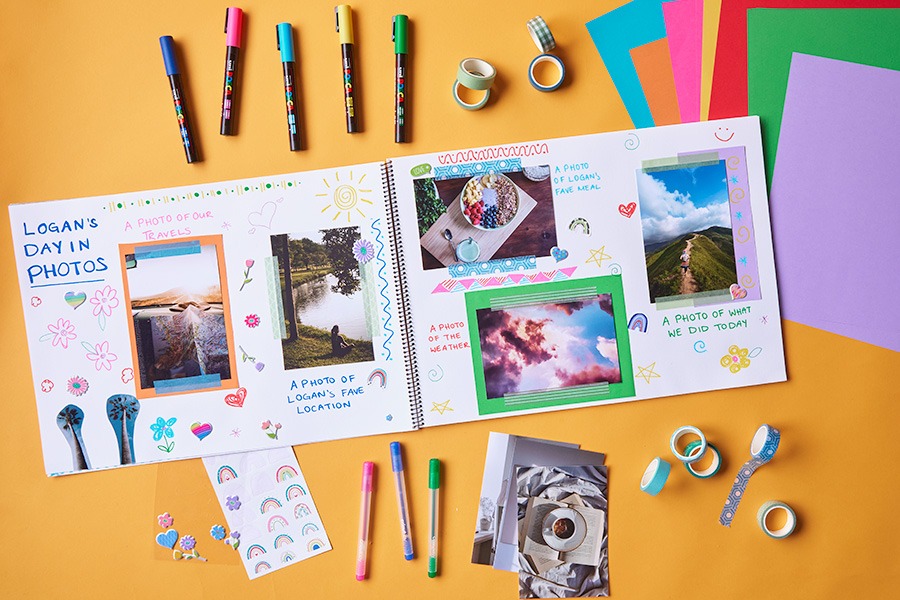
Create a wonderful memento of a family holiday with a daily activity for your kids. Inspire them to log the school holiday magic and encourage them to experiment with writing, crafts and photography.
“Scrapbooking has so many benefits [for children] including literary skills, fine motor skills with cutting using scissors, using glue and encouraging creativity,” says primary school teacher Emily Gregory. Follow her tips to keep little hands and minds busy.
Choose Your Scrapbook
A large scrapbook gives lots of space and room for playful daily entries. “[Encourage] composition skills such as visual balance and use of space, texture and colour as well as idea generation,” says Emily.
Write Some Daily Prompts
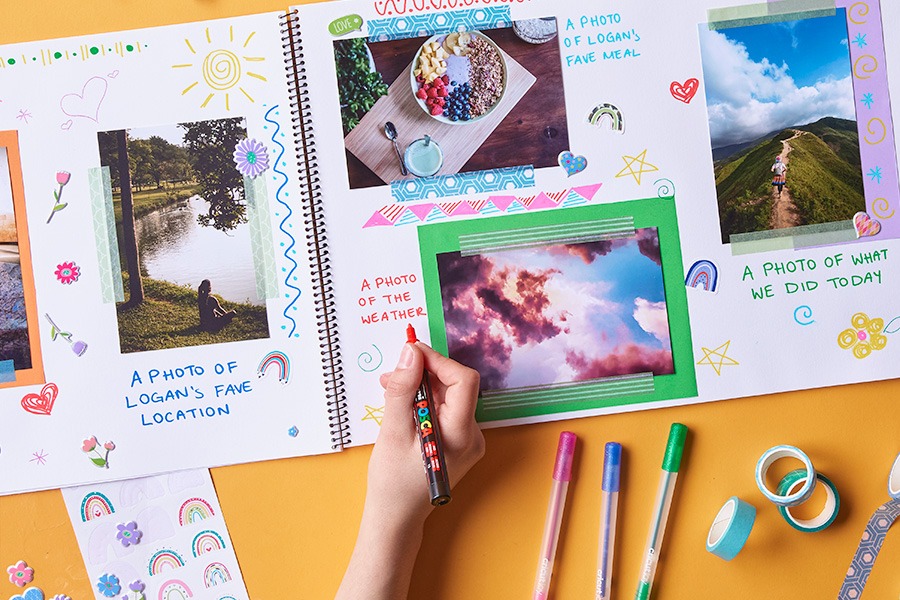
Variety is the key here. Keep kids engaged by writing different prompts. For example, ‘Make a map of a journey you did today. Include drawings or photos and how you travelled.’ Encourage them to collect and stick in items like tickets, postcards and menus as well.
Keep them inspired with a mix of topics and options for different things to do each day. For example, some pages could be focused on writing, collecting mementos, drawing, photos or a combination. “It’s also important to think of some local things they can also write about if they are just at home for the day with no help or activity planned,” says Emily.
Encourage Different Literacy Skills
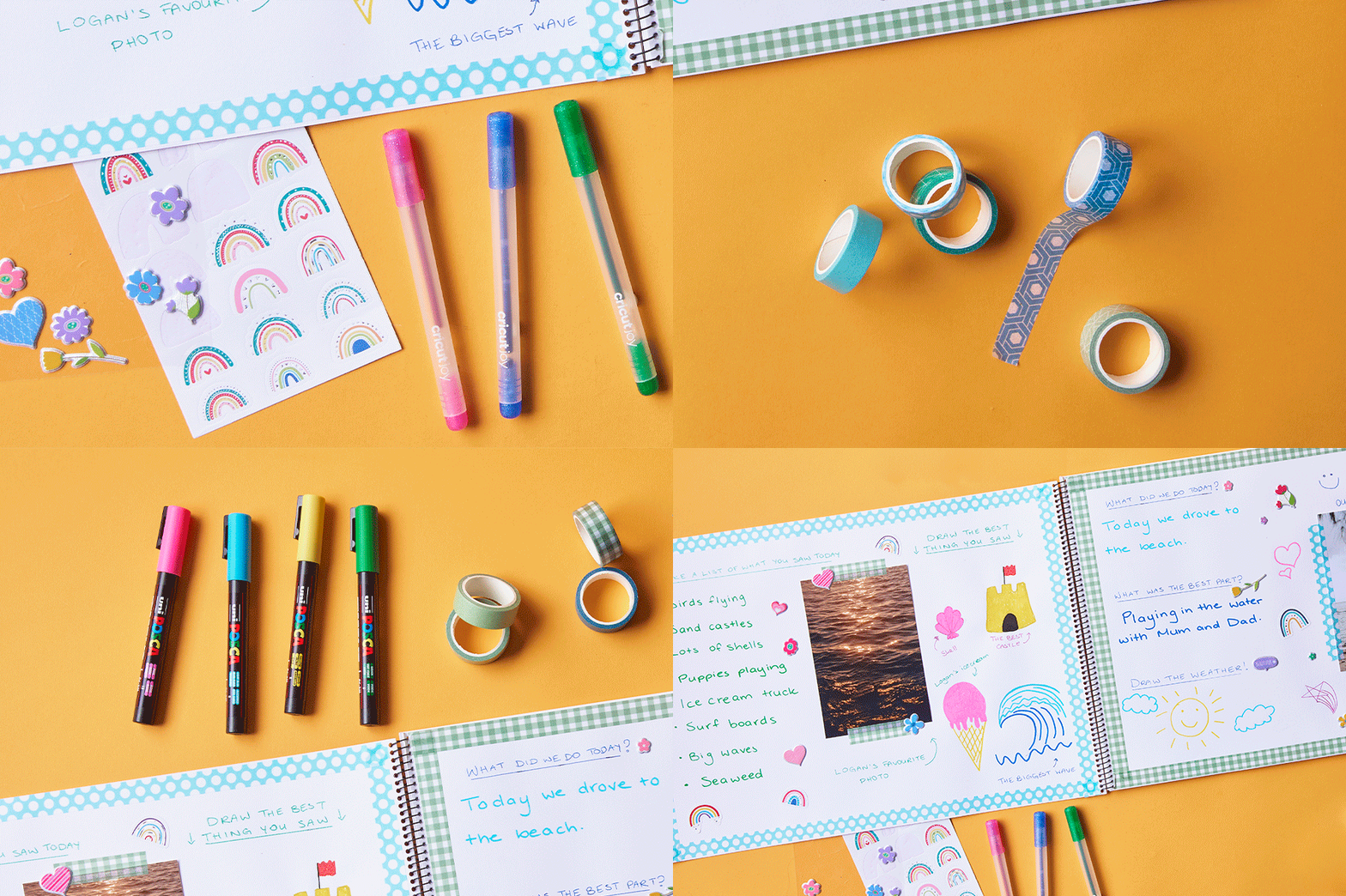
Put out pens, pencils and markers so they can try different kinds of tools to write with. “Encourage a mix of lists, instructions like recipes and daily activities.”
Add Some Visual Fun
Washi tape helps stick in photos and create borders. “Encourage the elements of art that are taught in primary school visual arts, which are line, colour, tone, space, form, texture and shape,” says Emily.
Photos will encourage your child to think visually. Show examples of how to take and use different kinds of photo subjects, like nature, siblings, animals, food and collages. “In school we use WAGOLL, which stands for 'What a good one looks like’. Kids respond well and create better results if they can see some good examples before they begin,” says Emily. An instant camera that prints out shots on the spot is a handy option to keep the creativity rolling, or you can print out photos from your camera or phone ahead of time.
Stickers are a non-messy way for kids to get artistic. “Kids love stickers (8 to 9-year-olds will do anything for them!), and stamps too,” says Emily. Use them to decorate page borders, highlight favourite memories or mark special days on a holiday calendar spread. Themed sticker sets – think animals, travel, food or nature – can even inspire the day’s entry, giving kids a visual starting point when they’re not sure what to write about.
What to Try
- Studymate A3 Recycled Sketch Book Orange 40 Pages
- Cricut Joy Glitter Pens 0.8mm 3 Pack
- POSCA PC3M Paint Markers Assorted 8 Pack
- Polaroid Go 2 Instant Camera Purple
- Learning Can Be Fun Over the Rainbow Holographic Stickers
- Kadink Puffy Sticker Glitter Sheet Heart & Flower Design
- Kadink Holographic Sticker Sheet Star Design
