


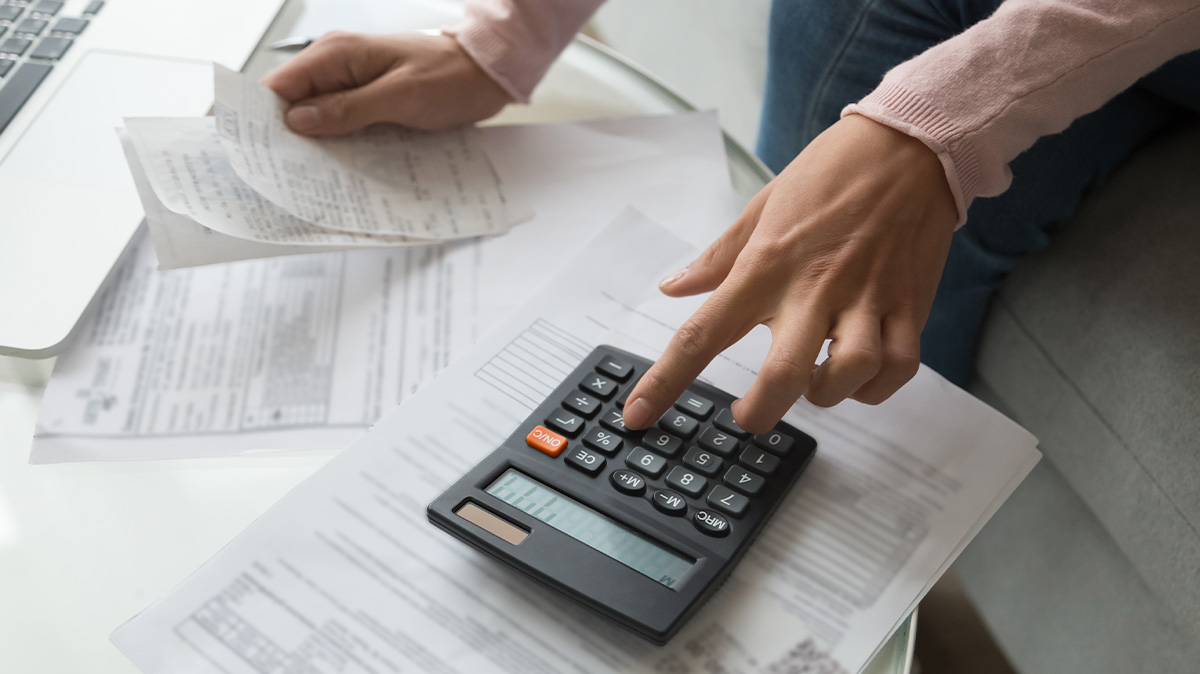
Does tax time sneak up on you every year? Do you find yourself scrambling to make sense of crumpled receipts and scribbles on random sticky notes, just to get your tax return in on time? Small changes can go a long way when it comes to staying organised for the end of financial year. Discover how these finance experts manage tax time and the EOFY hacks they swear by.

EOFY Tips to Save Money and Time from Ladies Finance Club
Molly Benjamin has built a business on making finance approachable, so she knows a thing or two about making tax time a breeze. Molly, alongside some Ladies Finance Club ambassadors, shares the easiest ways you can get the most from your return.
Know Your Tax Deductions
“Many [people] assume the [Australian Taxation Office] will automatically apply everything for them, but while the ATO knows your income, they don’t know your deductible expenses unless you track them,” Molly says. “The simplest way to avoid stress and missed deductions is to stay organised throughout the year. Tax time shouldn’t be a scramble, it should just be a final step.”
Make Time to Audit Expenses
Molly encourages using tax time as a financial reset moment to review ongoing expenses. “[It’s] the perfect opportunity to reset and review your subscriptions, insurances and utilities,” she says. “Every time I sign up for a new tool, I add it to an Excel spreadsheet. Then in June, I do a full audit to make sure I’m actually getting value from it. These small monthly costs might seem insignificant, but over a year they can add up to thousands.”
Digitise Your Records
Using digital tools will help you streamline your systems and help you organise your records. The Officeworks app saves your digital receipts from Officeworks so you can easily track your purchases. “If it’s on paper, scan it. If it’s emailed, file it immediately or pop it in a Google Drive,” says Molly. “The biggest source of tax time stress isn’t tax itself; it’s trying to find information months later.”
Diana Todd, Ladies Finance Club Ambassador and Founder of Balance Tax Accountants, recommends creating a dedicated email folder for receipts. “Most receipts are emailed these days, so having one place to store them ensures nothing gets lost.”
SEE ALSO: Top Micro Business Tax Tips for EOFY: Miss Trixie Drinks Tea

Mauro’s Tips To Get The Most From Your Tax Return
Julian Mauro is the director and CEO of accountancy firm Mauro and he believes the recipe for tax time success requires two things: “discipline and systems to make things as easy as possible to track!” This end of financial year, steal a few of his strategies for yourself.
Always Prepare For Tax Time
No-one likes surprises at the end of the financial year, which is why Julian says planning ahead is important. “This can be a mix of missing opportunities for purchases in advance to reduce tax or reviewing your business structure and putting aside the right amount of [money for paying] tax to avoid any last-minute scares,” he says. “[Forward planning] is easier than scrambling at tax time and or paying extra tax to the ATO!”
Understand Your Tax Position
Julian says accounting software like Xero can help small business owners store receipts easily, track expenses as they go and also get an understanding of how their business is performing and potential tax positions. “Spreadsheets are great but they have their limitations,” says Julian. “Things can be entered wrong, missed altogether and the overall flexibility of reading and presenting your numbers is harder than it needs to be.”
Claim Your Travel Costs
When you’re a small business owner, claiming travel costs is a useful deduction, so get into the habit of recording your kilometres. “For car travel, either track kilometres only and claim a rate per kilometre at tax time or for those who do a lot of work driving, keep a 12-week logbook of personal and work kilometres [including opening and closing odometer readings] to determine the work percentage. You can then claim that portion of car costs,” says Julian.
Keep All Your Receipts
When it comes to business expenses, always keep your receipts. “A big misconception is that anything under $300 doesn’t need a receipt. This isn't the case,” says Julian. “You may still be able to claim up to $300 in total without receipts per year, but that’s $300 in total and not per receipt.”
[H3] SEE ALSO: Bush to Bowl’s EOFY Tips for Small Businesses

Organisational Tax-Time Tips from MoneyGirl
As the co-founder of MoneyGirl, a social enterprise that aims to empower women through financial literacy, Zee Heart has learned that tax time doesn’t have to be stressful. In fact, she’s picked up a few tried and tested tips along the way to help make the end of financial year a little easier.
Schedule Your Admin Time
If you don’t stay on top of your finances throughout the financial year it can quickly spiral into an indecipherable mess – exactly what you don’t want at tax time. For this reason, Zee found a way to make doing admin more interesting: “I do a monthly money circle with friends where we sit together for two hours every month on our laptops and look through our finances,” she says.
“Most of us have businesses so we’re getting things sorted like reconciling accounts, sending invoices and making payments. At the end of the two hours we usually pat ourselves on the back and have a little celebration for doing [our admin].”
Hold Yourself Accountable
As a neurodivergent business owner, Zee is the first to admit she is bad with deadlines, which has required her to implement the right systems to make tax time less, well, taxing.
This is one of the reasons why she schedules a catch up with her accountant well ahead of June 30. “We discuss what we need to do. For example, do we need to purchase an asset before the end of the financial year? What offsets could we be eligible for? What are the [business’] projections looking like and how much tax will we owe,” she says.
Separate Business and Personal Accounts
If you’ve just started a micro business or have a few employees, one thing Zee stands by is avoiding mixing personal and business money together. “[It can] make tax time for business owners more complex,” she says. Directing funds and deducting expenses into one account can make it harder to reconcile your business income and costs.
Make Your Systems Work For You
Being neurodivergent, Zee enlists various tools to better optimise her work setup. For example, she uses noise-cancelling headphones and listens to the Spotify Deep Focus playlist as this “signals to my brain that it’s work time”.
To help her keep track of any tax and work tasks, she uses a whiteboard and writes down each task on a sticky note. “I pick my three main ones for the week and they go into the ‘next up’ column. I pick one at a time to go into the ‘in progress’ column. Then finally the ‘ta-da’ column. The physical moving of sticky notes is a dopamine release for me.”
What to Try
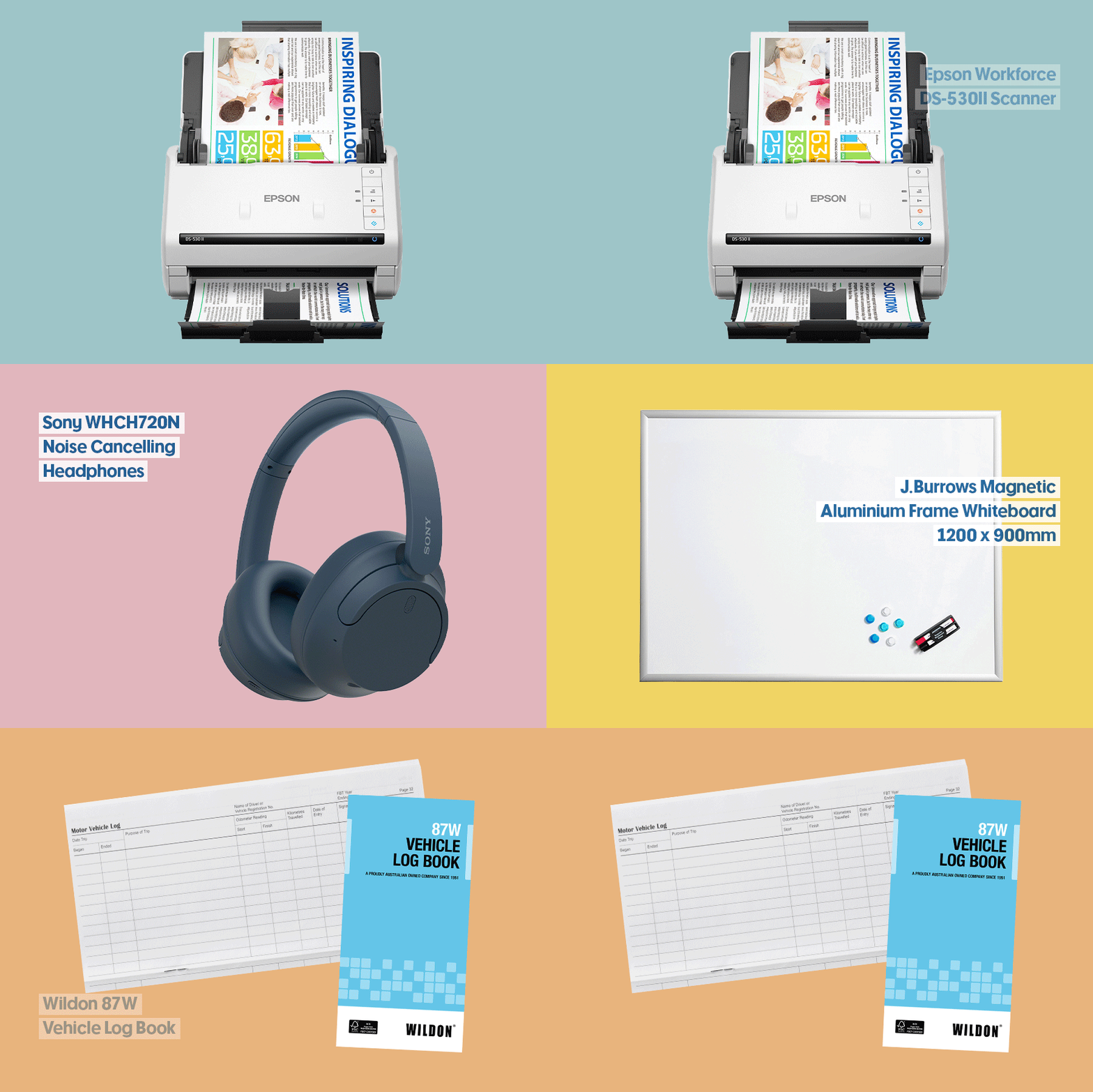
- Epson Workforce DS-530II Scanner
- Sharpie S-Gel Retractable Gel Pens 0.7mm Assorted 4 Pack
- Wildon 87W Vehicle Log Book
- J.Burrows A4 PP Notebook 120 Page Pink
- Sony WHCH720N Noise Cancelling Headphones Blue
- Post-it Super Sticky Notes 76x76mm Assorted 15 Pack
- J.Burrows Magnetic Aluminium Frame Whiteboard 1200 x 900mm
SEE ALSO: Top Small Business Tax Tips for EOFY: Renee Roumanos Legal
This is general information only and does not constitute taxation or legal advice. Other requirements under the tax law apply. Seek professional financial and/or legal advice to determine the right outcomes for your business or individual needs.
